VINCE STAPLES WAGES WAR WITH "CRY BABY"
A fiery, politically charged album that infuses punk with the sharpest writing of Staples' career
Compton-native rapper Vince Staples has released his seventh studio album, “Cry Baby.” It’s a politically charged project tackling America’s racial violence and exploitation across ten fast-paced, rock-infused tracks.
Over the last 15 years, Staples has gained a significant following, with hits like “Norf Norf” and “Big Fish.” He’s been a frequent collaborator with artists like Earl Sweatshirt and Tyler, The Creator since their days as part of Odd Future in the early 2010s, and has more recently been featured on projects with JPEGMAFIA and JID.
“Cry Baby” arrives two years after the release of “Dark Times,” an album I was a big fan of for the dark, untrustworthy atmosphere and introspective writing about worth and identity.
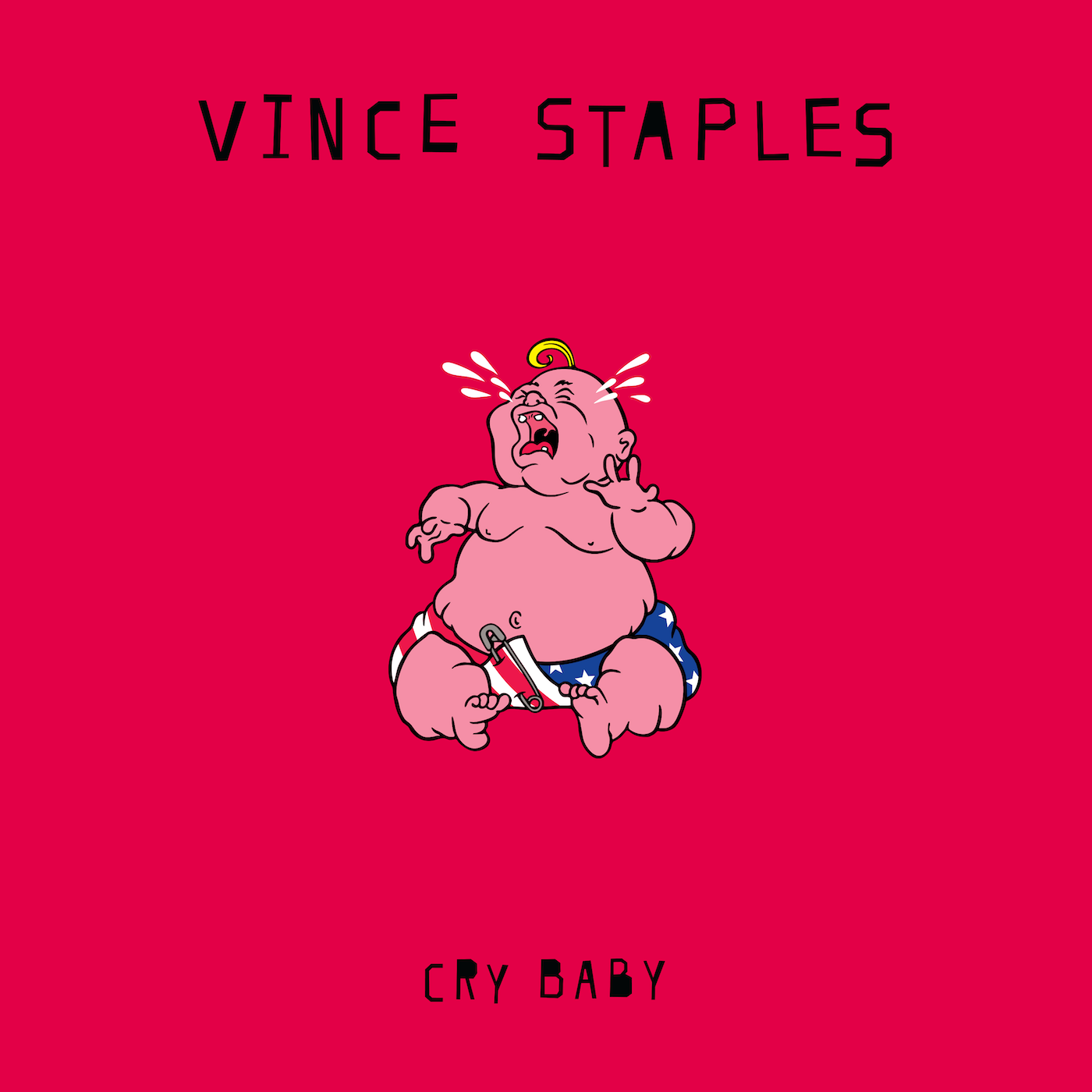
The album art for “Cry Baby” features a blonde, fat baby throwing a tantrum with the American flag used as a diaper. This depiction of America is a persistent theme for Staples on this album, as he touches on his experiences as a black man from Compton, living in a country that seeks to push him and his family down with systems of racial inequality, police violence, and discrimination.
The opening track and lead single, “Blackberry Marmalade,” sets the tone with a borderline punk sound and pointed references to his new status as an independent artist: ““Cracker jacked the sound and soul / Then boxed me in and shelved my shit,” alluding to the feeling of being boxed into hip-hop and the racial divides often employed in music marketing. The music video for this song is an intriguing watch, shot from the point of view of a mass shooter who first corners Vince Staples in the parking lot of a diner before shooting him and everyone inside. The video ends with the shooter turning the gun on himself as the camera turns towards the sky, focusing on a Martin Luther King Jr. quote asking not whether we will be extremists, but what kind.
Second on the project is a fan favorite, “Go! Go! Gorilla,” where Staples turns his attention to police brutality and the media’s biased portrayal of Black men. The song is catchy with a playful chorus, but the meaning behind it is dark. “Red-lined, gentrified / They gave wrist slaps to them and sentenced mines / Went from bread lines to picket lines to mainline prison time / For the crimes that we commit, but genocide / Don't mean nan' to Uncle Sam, guess it's dignified.” The track ends as the chorus fades into a troop of monkeys' howling, exposing how the American system treats black people with redlining, destruction of culture, unbalanced sentencing, and a for-profit prison system that thrives on unpaid labor. I enjoy how Staples continues to lean on strong and focused themes, so often in hip-hop, audiences are treated to catchy songs with little meaning beyond braggadocio, and Staples concept on “Cry Baby” is an enjoyable, raw deviation from that.
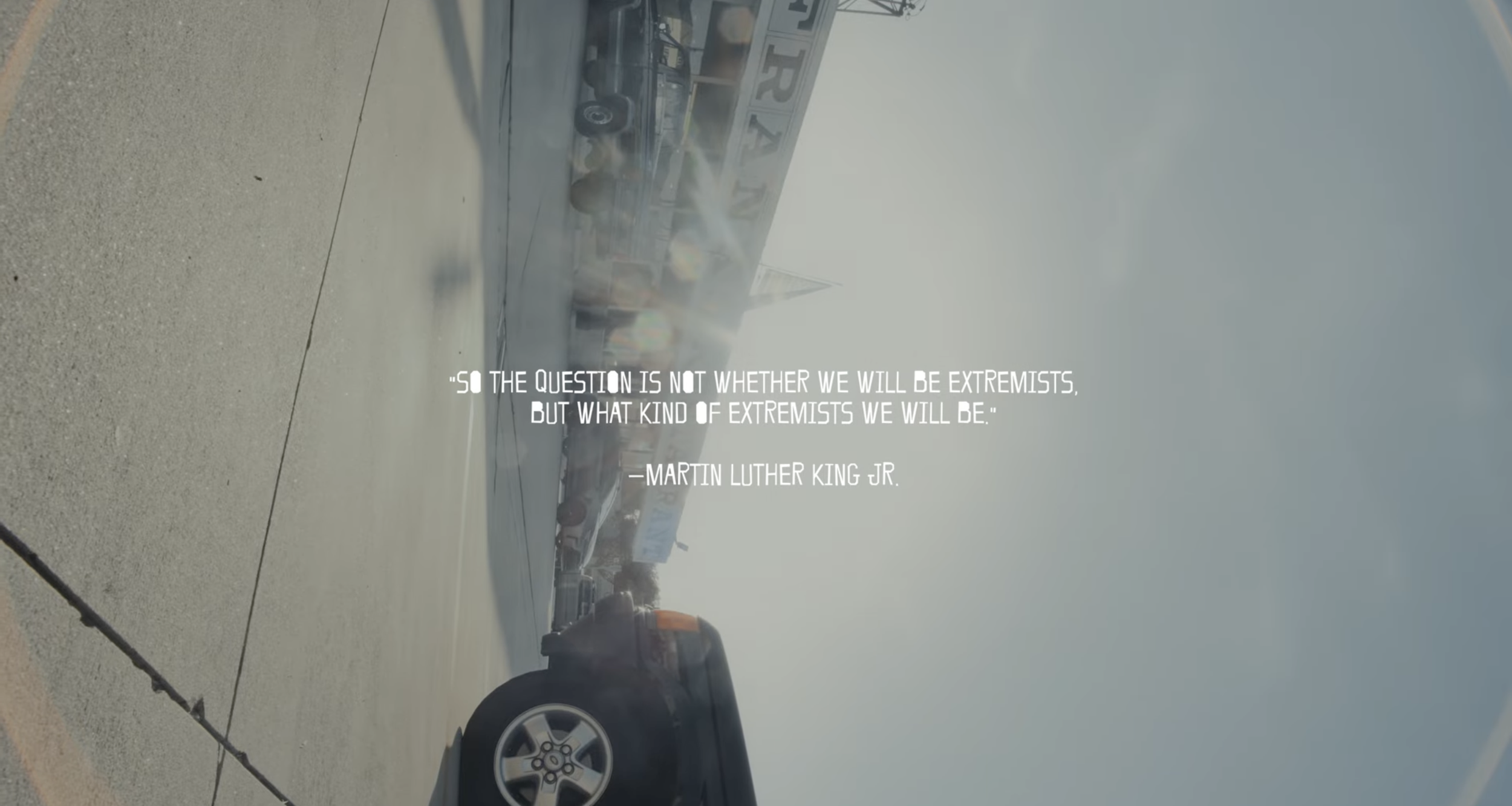
Vince Staples, Blackberry Marmalade, 2026
“White Flag” is a soothing, slower track where Staples focuses on the exhaustion of the constant presence of racism in his life. “White flag, I don’t wanna fight no more.” He’s willing to surrender to escape his constant hell. It’s another track with an addictive chorus.
A booming guitar riff joined by a punk-rock drum pattern begins “The Running Man.” The song’s distorted, gravelly vocals elevate the track's energy, and the background vocals keep it moving forward. Staples calls for a revolution and focuses again on the over-policing of his community, even though segregation has ended. He raps, “I can’t pretend I don’t love you, Life is a bad bitch, embrace her, bursting your bubble,” rejecting the idea that endurance alone can overcome systemic oppression.
Entertainment has long been used as a tool to pacify resistance to oppression, and in the 21st century, television is at the forefront of this practice. On “TV Guide,” Staples opens with a verse that leaves little ambiguity: “Woke up, turned on the TV/Went to sleep watching TV.” On such a strong album, the theming and delivery make this a standout track on “Cry Baby.”
A sample of Slick Rick’s 1988 “Children’s Story” steals the show on “The Big Bad Wolf.” It’s the project's most explicitly hip-hop track. It’s a short and pointed song that builds on Slick Rick’s lyrics about police violence. The rhyme patterns on this track, paired with the sample, make it a unique listen. I haven’t heard anything similar to this in the scene for a long time, and sharing so many similarities thematically with a song from almost 40 years ago highlights how frustrating the lack of progress in America is for an artist like Staples.
“Only In America” pivots to an ironic approach towards patriotism on a groovy, upbeat track. Again, Staples' lyricism steals the show as he compares America's famous red, white, and blue to police lights. This is one of my favorites from the album; the energy is bouncy and unmatched. One of my top moments on “Cry Baby” comes when Staples raps, “Land of the free, home of the brave / Home of the natives, home of the slaves.”
The weakest moment on “Cry Baby” comes on “Do You Know The Devil” with annoyingly vague writing. The delivery is more of a constant, quiet drone than his usual monotone confidence. On such a loaded album, it’s easily forgotten.
It’s quickly redeemed by “Cotton,” the album’s peak track and, arguably, the best track in Staples’ discography. The chorus is spellbinding, the writing is technically precise, and the production perfectly matches the track's energy. “Drop the needle, turn up that volume / Record Spinning, it’s so hypnotic / Music makes you feel just like cotton / pick me up when I feel like falling down.” The vibrance of the track and vocal inflections that create such a standout moment on this song elevate “Cry Baby” from good to great.
“Cry Baby” closes with “7 In The Morning,” where the production reminds me a lot of his 2024 album, “Dark Times.” It’s fittingly dark and eerie as Staples speaks on issues like Gaza and immigration. Staples raps from the perspective of a war-victim who imagines America as the ultimate escape from violence and suffering, only to be drawn into an inescapable pattern of war, poverty, trauma, and displacement ever present within the fantasy of freedom. This is an extremely heavy track; listeners will have a hard time coming back to it, yet the message is as powerful and the writing as vivid as in any of the previous songs on the album.
Overall, the concept and overarching themes of “Cry Baby” create a strong and cohesive project that is by far Staples’ most realized sound to date. The short tracklist keeps the album dense and satisfying. Staples’ writing feels personal, powerful, and enlightening, making it clear that even after 15 years, he is better than ever.